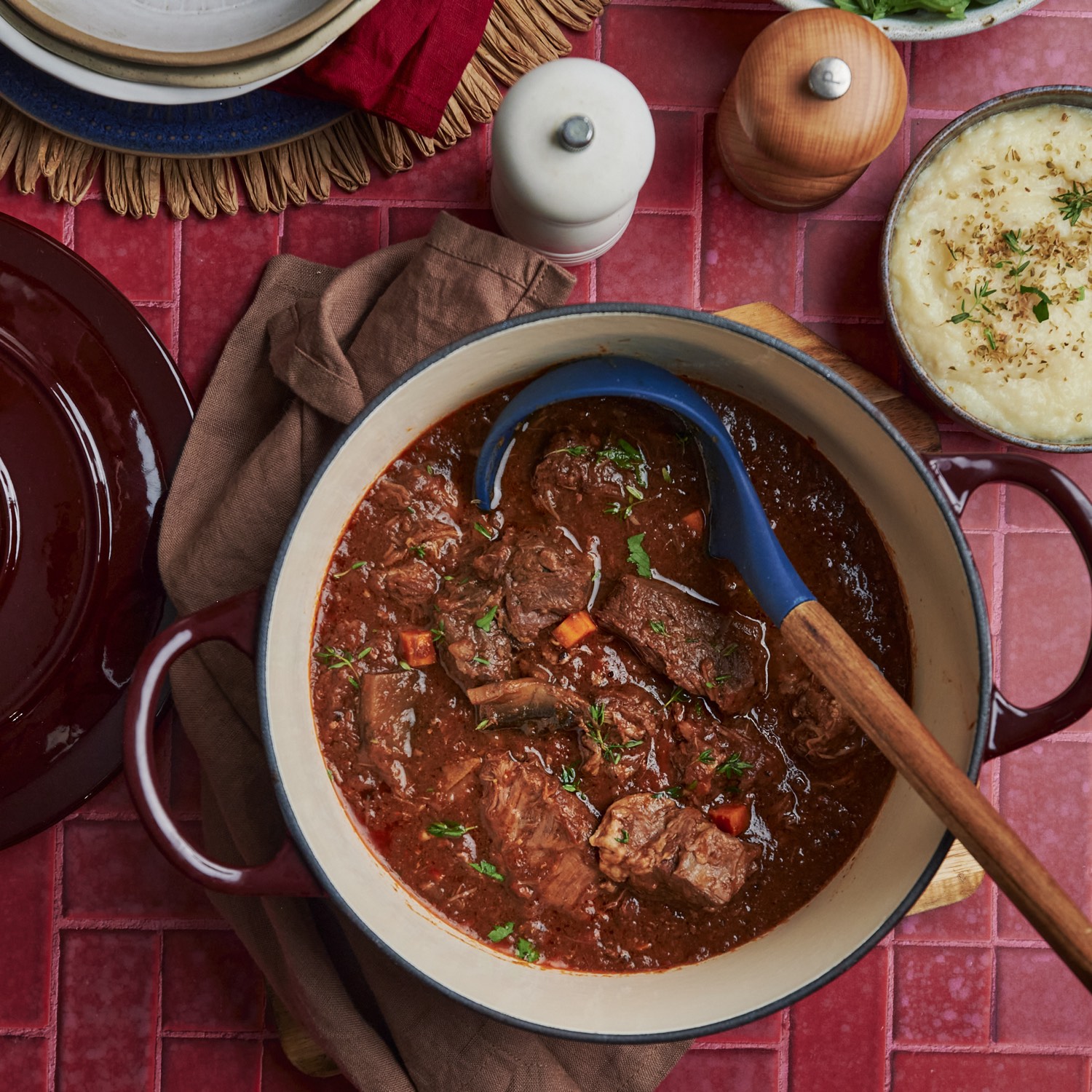
Bœuf bourguignon is often introduced as humble peasant cooking. It is a good story, and mostly untrue. Beef was not a poor family’s everyday meat, and neither was the wine it was braised in. The dish belongs closer to the cellar than the field.
In nineteenth-century Burgundy, beef was cooked slowly in the region’s own wine — a Sunday dish in a place that never lacked for a bottle. By 1903, Escoffier had set it down in Le Guide Culinaire, moving it out of the home kitchen and into the professional canon. The inns of Burgundy and the bouchons of Lyon turned it into a benchmark of regional cooking.
Interpretation is tradition working properly.
Then it travelled. Mastering the Art of French Cooking carried the recipe into English-speaking kitchens in 1961, and the argument went global. Today it is cooked on every continent, in a hundred dialects of the same dish — and settled nowhere.
That refusal to settle is exactly the point of the day. The charter asks only that we cook it as it was handed down and without trying to reinvent it — which still leaves room for Burgundy’s version, your grandmother’s, and the one from a Melbourne wine bar.